Black-and-White Is Not a Filter
- Worajedt Sitthidumrong
- Photography
- June 15, 2026
Table of Contents
Black-and-white photography is not a rescue operation for weak color. It is a different way of seeing. The best monochrome frame usually begins before the shutter, not inside the editing app.
Color asks one set of questions. Is the palette harmonious? Does one hue pull too much attention? Does the light make the scene feel warm, clinical, nostalgic, or strange? Black-and-white removes those questions and replaces them with others. Where is the weight? Where does the eye enter? Is there enough separation between subject and background? Does the light have shape?
This is why a good black-and-white photograph often feels deliberate even when the scene is ordinary.
Think in tone
Tone is the grammar of monochrome. A red shirt and a green wall may separate beautifully in color, but collapse into the same gray. A pale face against a pale sky may need shadow, angle, or patience. The camera records luminance, but the photographer has to anticipate how the scene will translate.
When I carry a digital camera, I like using a monochrome preview sometimes, not because the JPEG is final, but because it teaches the eye to stop depending on color contrast. With film, the discipline is even stronger. You commit earlier. You pay attention differently.
Contrast is not always drama
It is tempting to push black-and-white images toward hard contrast. Deep blacks, bright highlights, heavy clarity. That look can be powerful, especially for street scenes and architecture, but it is not the only language.
Soft gray can be beautiful. Low contrast can hold atmosphere. Midtones can carry the emotional center of a portrait. The question is not “How punchy can this be?” The better question is “What kind of attention does this photograph need?”
Camera choice changes behavior
The camera does not make the photograph, but it changes how the photographer behaves. A medium format body encourages slower framing and attention to edges. A compact APS-C camera makes it easier to walk, react, and disappear into the scene. A Micro Four Thirds setup can be wonderfully practical when reach, stabilization, and small lenses matter.
That is why I enjoy moving between systems. Fujifilm GFX, Fujifilm X Series, OM System, Panasonic, and older film cameras all create slightly different habits. The files matter, but the behavior matters too.
Look for edges and rhythm
In monochrome, small distractions become loud. A bright corner, a pole behind a head, a hand cut awkwardly by the frame, or a background line through the subject can weaken the photograph quickly. At the same time, repeated shapes can become stronger. Windows, shadows, railings, shirts, hands, and faces can create rhythm when color is no longer doing the work.
This is the quiet pleasure of black-and-white photography. It rewards looking.
Let the image be simple
Some photographs need less explanation. A face in soft light. A wet street. A staircase. A camera on a table. The frame does not need to announce itself. It only needs to hold attention longer than expected.
Black-and-white is not a filter. It is a promise to pay attention to light, tone, and timing.
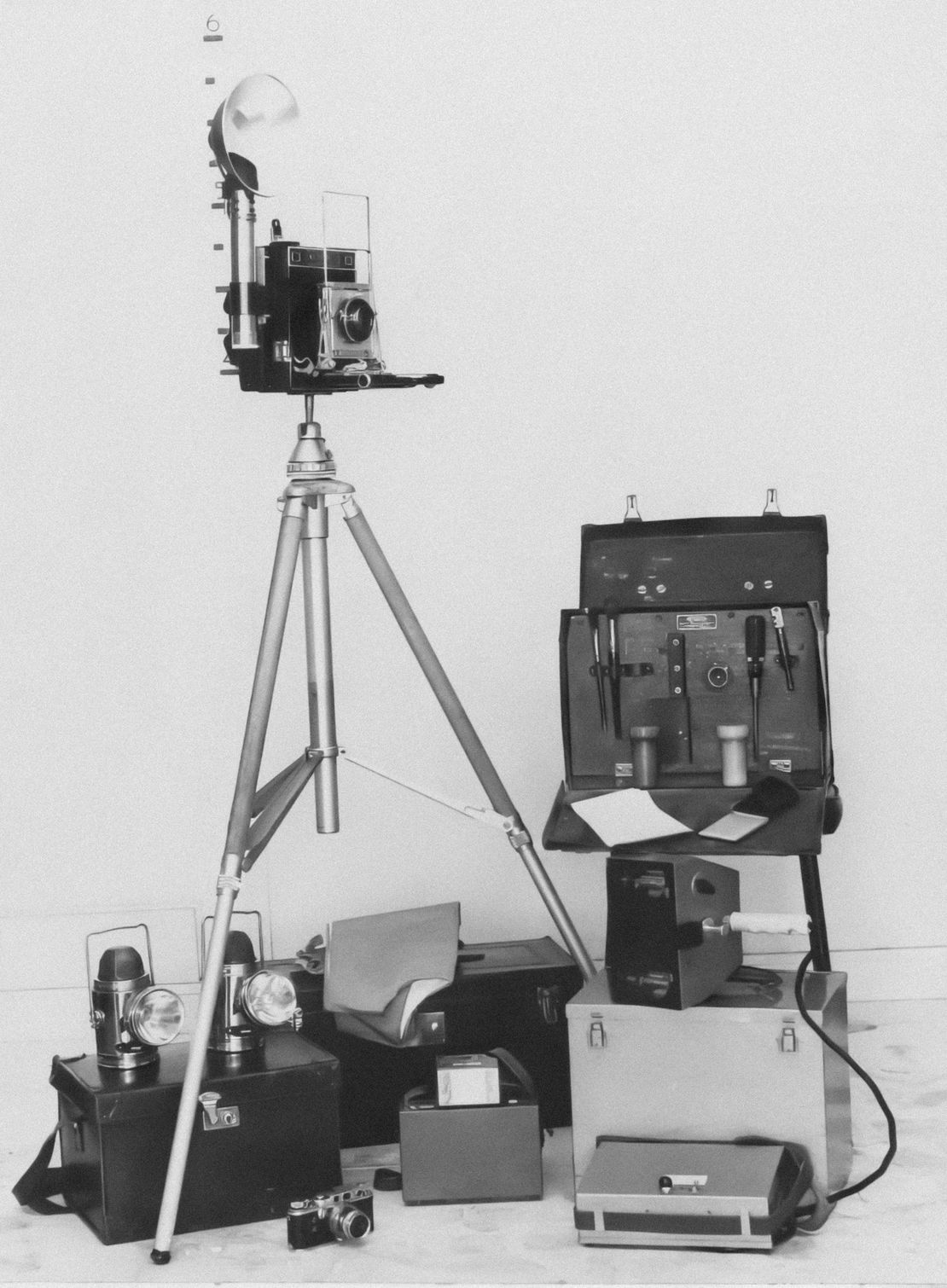
Cover image: Photo by East Riding Archives on Unsplash.